











2025.12.05
Samadhi in Daily Life
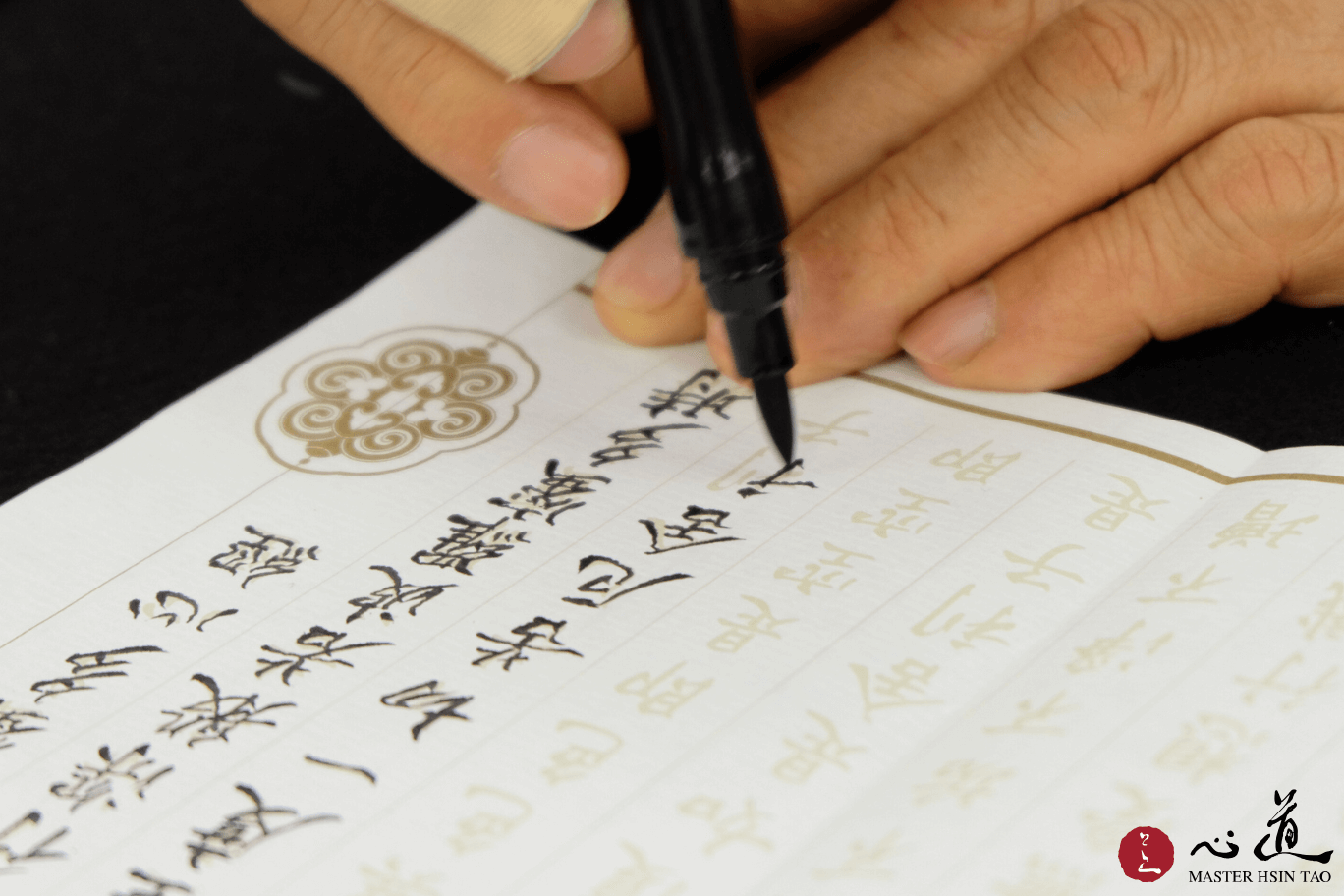 The learning and practice of the Dharma must proceed through hearing, contemplation, and application. After listening, one contemplates; after contemplating, one applies the teachings. Therefore, we should broaden our thinking. When our perspective is expanded, our inner space opens up; through extensive listening and learning, we will become more receptive, better able to internalize the teachings, and capable of applying the Dharma in daily life. If we are unwilling to listen, unwilling to act, or if we act while remaining prone to calculation, it becomes difficult to experience the process of hearing, contemplation, and application.
What we engage in is called “the way of the bodhisattva,” which means consistently carrying through one’s principles of practice. After encountering and understanding the Buddhadharma, we first integrate it into the minutiae of everyday life; then we carry it through the karmic connections of life after life, ultimately arriving at the fruition of ultimate awakening. When we practice in the midst of life, we will be able to connect with all aspects of life. Cultivating from a single fixed point or perspective fails to address all situations. Thus, “Work is Dharma practice, and life is the field of merit.” This differs from conventional methods and belongs to what may be termed “samadhi in daily life.”
Our thoughts should abide in the mind itself, not in fantasies—that is, not in deluded appearances. The external world is impermanent, transient, and constantly changing. Yet when we enter meditative concentration, what remains within is a quality of stability, serenity, joy, gentleness, and harmony. When this is then brought into daily life, peacefulness, stability, and gentleness manifest everywhere; the inner and outer become unified. This is samadhi in everyday life.
 Thus, the mind must enter a state of notionlessness—that is, we must realize the nature of the mind that is unchanging. This unchanging true mind does not belong to any material substance or phenomena; it is notionless. That which is notionlessness, with qualities of unarising and unceasing, indestructible, and therefore perfection in itself. As the saying goes, “The body is like a cluster of foam; the mind is like the wind.” The mind moves like the wind; the body is fleeting and impermanent like bubbles. How could the external environment be otherwise? When this is understood, we no longer cling to external things, nor do we cling to internal delusions. Seeing the unarising gives rise to joy; seeing the notionlessness gives rise to gentleness. In sum, to live with our true mind, we must reduce engagement with external objects that provoke afflictions. One must remain constantly vigilant, recognizing that all phenomena are impermanent and potential grounds for downfall. Awareness brings non-attachment; therefore, one can experience many opportunities to awaken amid daily life.
We always wish for a life that is bright, at ease, harmonious, joyful, and stable. Yet our minds habitually follow circumstances and drift with the current, like waves that roll however they are driven—splashing low or high, all of it merely fluctuations of the mind. The height of these mental waves corresponds to the afflictions that arise: the greater the affliction, the steeper the wave, and the more intense the impact when it crashes down. Hence, we must firmly establish and strengthen the power of mindfulness that does not give rise to discrimination in response to circumstances. Through this, we learn to discern the sources of discomfort and are able, step by step, to break through its constraints. Dharma practice truly requires transformation through hearing, contemplation, and application—culminating in the realization of complete and perfect awakening, the anuttara samyaksambodhi.