





2025.11.21
Receiving and Upholding the Precepts: Finding the Path Across Lifetimes
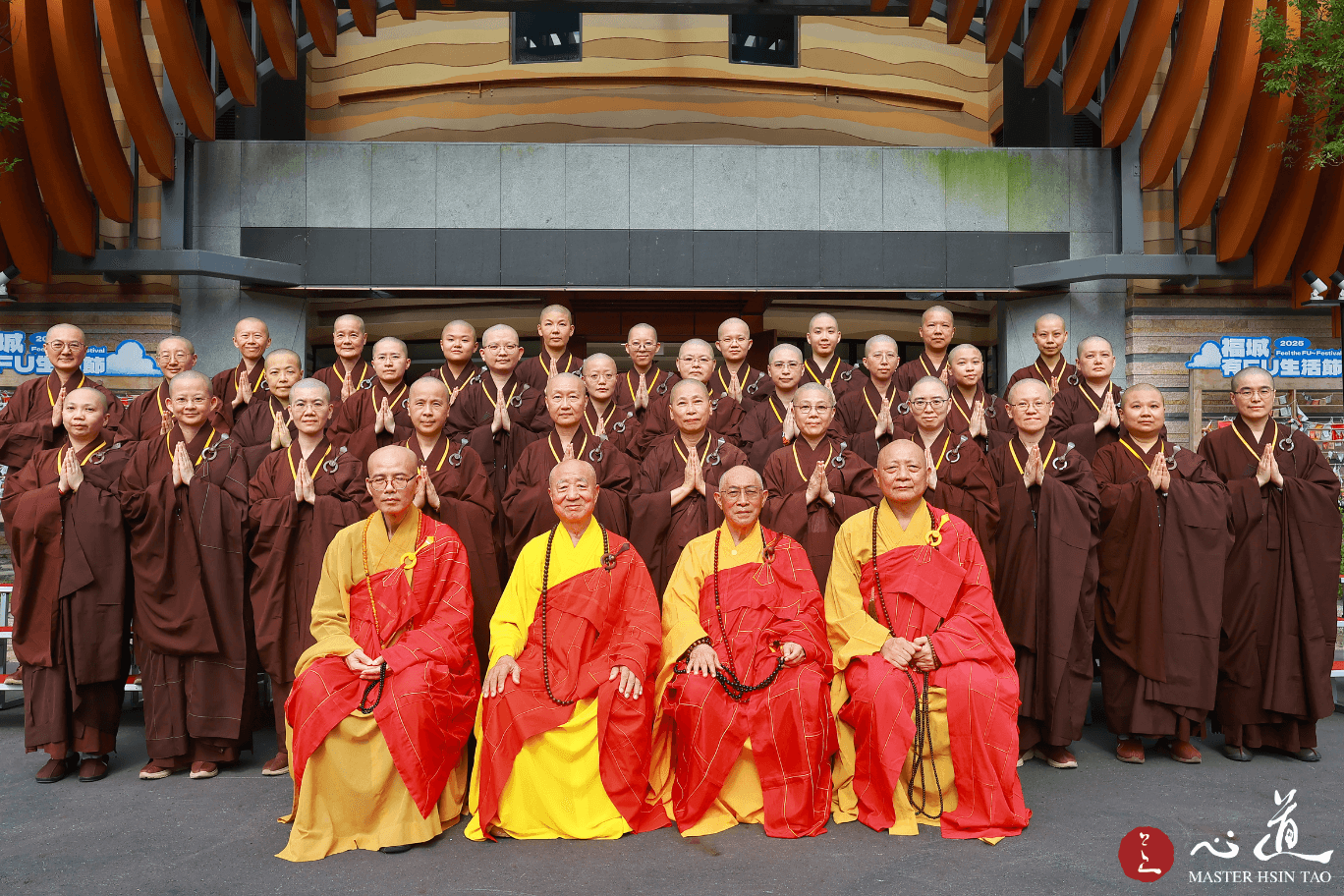 On 15 November 2025, prior to the formal conferral of the five precepts of laity and the Bodhisattva Vow, I wished to offer a few words of encouragement. I am truly delighted that all of you have come to receive the precepts. It is only after taking precepts that one comes to understand what it means to violate them; without taking precepts, one cannot truly know what “precepts” are, nor can one discern the path one’s life ought to follow. Once the precepts are received, one gains a clear understanding of the direction one should take.
Today, you are receiving the five precepts of laity and the Bodhisattva Vow. The first of the five precepts is refraining from killing. Those who uphold this precept will not provoke fear in others, for they do not harm others’ lives; the lives of others are thus safeguarded. By living a vegetarian diet and refraining from killing—by not consuming the flesh of sentient beings—those beings in turn will not harbor resentment or retaliate us, for we incur no karmic debt toward them. The second precept is to refrain from stealing. Those who uphold this precept neither steal nor deceive. Others who interact with us will therefore feel at ease.
 The third precept is to abstain from sexual misconduct. One must understand that once sexual misconduct occurs within a family, the entire family can fall into ruin. Thus, the precept for spouses is the avoidance of sexual misconduct, which means not engaging in inappropriate behavior. We undertake practice not to create trouble, but to perform virtuous deeds and accumulate merit—to do what brings happiness to all. We must not do things that bring distress to others. Receiving the precepts provides a form of protection: once we know the precepts, we commit ourselves to observing them.
The fourth precept is to avoid false speech. Nowadays, many fraud schemes have made countless people to suffer great harm. People deceive one another to the point that families are destroyed and lives become unbearable. Practitioners must not be greedy; without greed there is no basis for fraud. We do not covet or take what is not rightfully ours. What is appropriate, we may accept; what is inappropriate, we must decline. The fifth precept is to refrain from intoxicants. Many tragedies—including fatal traffic accidents—arise from alcohol. Thus, upholding the precept against intoxicants is the most basic discipline for Buddhist practitioners. If we cannot uphold even this, we will not be able to guide or instruct others on the Buddhist path.
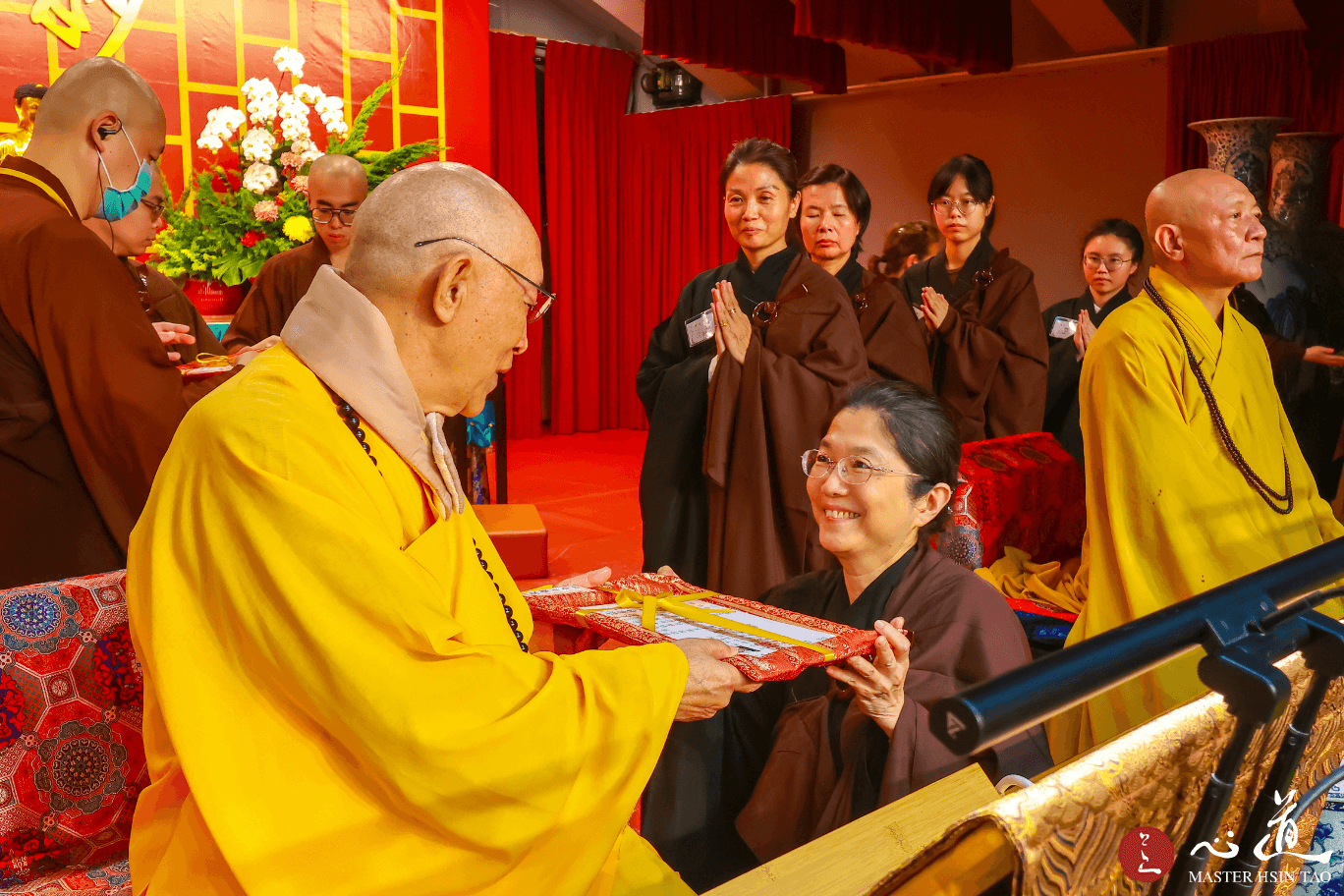 As Buddhist, we should cultivate ourselves to be affable so other people receive us with delight; only then will they be willing to follow us in learning and practicing the Dharma. To practice the Dharma is to perform virtuous actions, to abandon non-virtuous deeds, and to cultivate wholesome ones. Abstaining from all non-virtues and cultivating all forms of virtue is our work. We must do so joyfully and wholeheartedly, for this is the rightful path of our lives. The path of the Dharma is the pathway that makes life flourish to its full potential. It is the bright path: with virtuous causes and conditions come virtuous results; with non-virtuous causes and conditions come non-virtuous results.
Furthermore, we must engender bodhicitta. To engender bodhicitta is to remain inseparable from sentient beings—and to vow that until all beings attain Buddhahood, we remain with them. This is the “service system”: an active care that never ceases. A Buddha is one who, given rise to bodhicitta, no longer undergoes cyclic existence; and even if a Buddha manifests within cyclic existence, it is solely for the sake of bodhicitta. Thus, practitioners should not fear samsara, for with bodhicitta, samsara is not frightening; even if we return to cyclic existence, it is for the sake of bodhicitta.
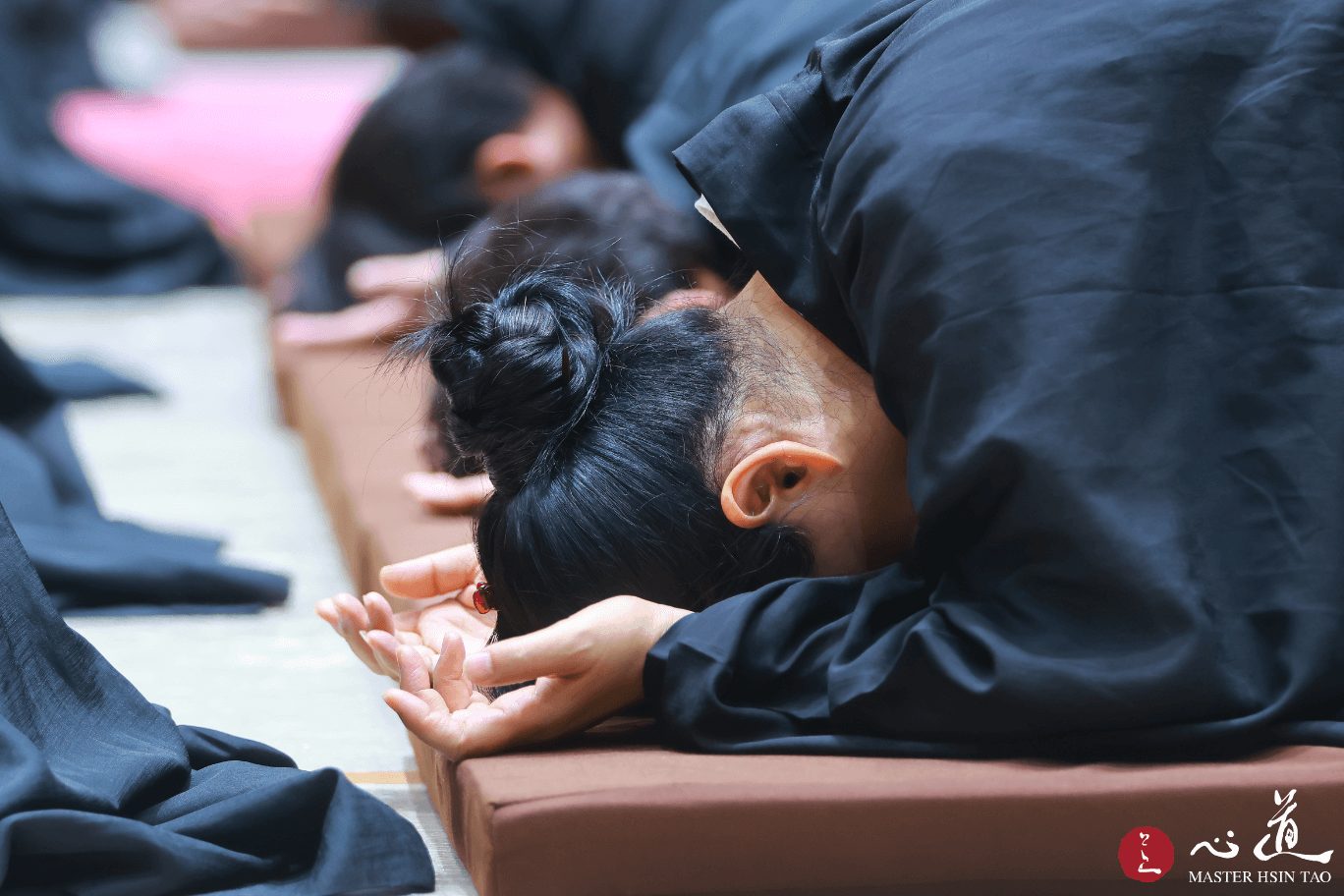 The Bodhisattva Precepts you are receiving today are the “six major and twenty-eight minor precepts” delineated in the Sutra of the Upasaka Precpets for lay practitioners. The six major precepts are: refraining from killing, stealing, sexual misconduct, false speech, and intoxicants, as well as refraining from speaking of the faults of the community of the fourfold assembly. This means not engaging in idle gossip or divisive talk. When time permits, we should speak of the Dharma; we should not engage in frivolous chatter. Speaking of the Dharma incurs no fault, generates merit, and benefits others.
Among the four fields of merit, the first is the “field of veneration,” which refers to honoring the Buddha and revering the Three Jewels. Offering and paying homage to the Three Jewels constitute the greatest field of merit. The second is the “field of gratitude,” meaning we must be filial to our parents and respectful to our teachers. The third is the “field of compassion,” which refers to showing kindness to all who suffer. As practitioners, we must always give rise to compassion. Recently, in the aftermath of the Hualien disaster, many “shovel heroes” emerged—individuals who, like Bodhisattvas, rescued others with compassion.
Within the twenty-eight minor precepts, one finds instructions such as: visiting and caring for those who are ill; offering clean and proper food to monastics who come seeking alms; assisting the poor; refraining from arrogance when one’s own precepts are well maintained while others struggle to keep theirs; avoiding residence as a male layperson within a nunnery; refraining from keeping cats and dogs; refraining from storing the three robes and alms bowl that properly belong to monastics; and observing laws without violation, including never engaging in tax evasion. When encountering monastics, one should walk behind them and not push ahead. Additionally, one must not raise silkworms, and so forth. These twenty-eight minor precepts are the refined guidelines and decorum of daily life, enabling us to conduct ourselves properly and respectfully.
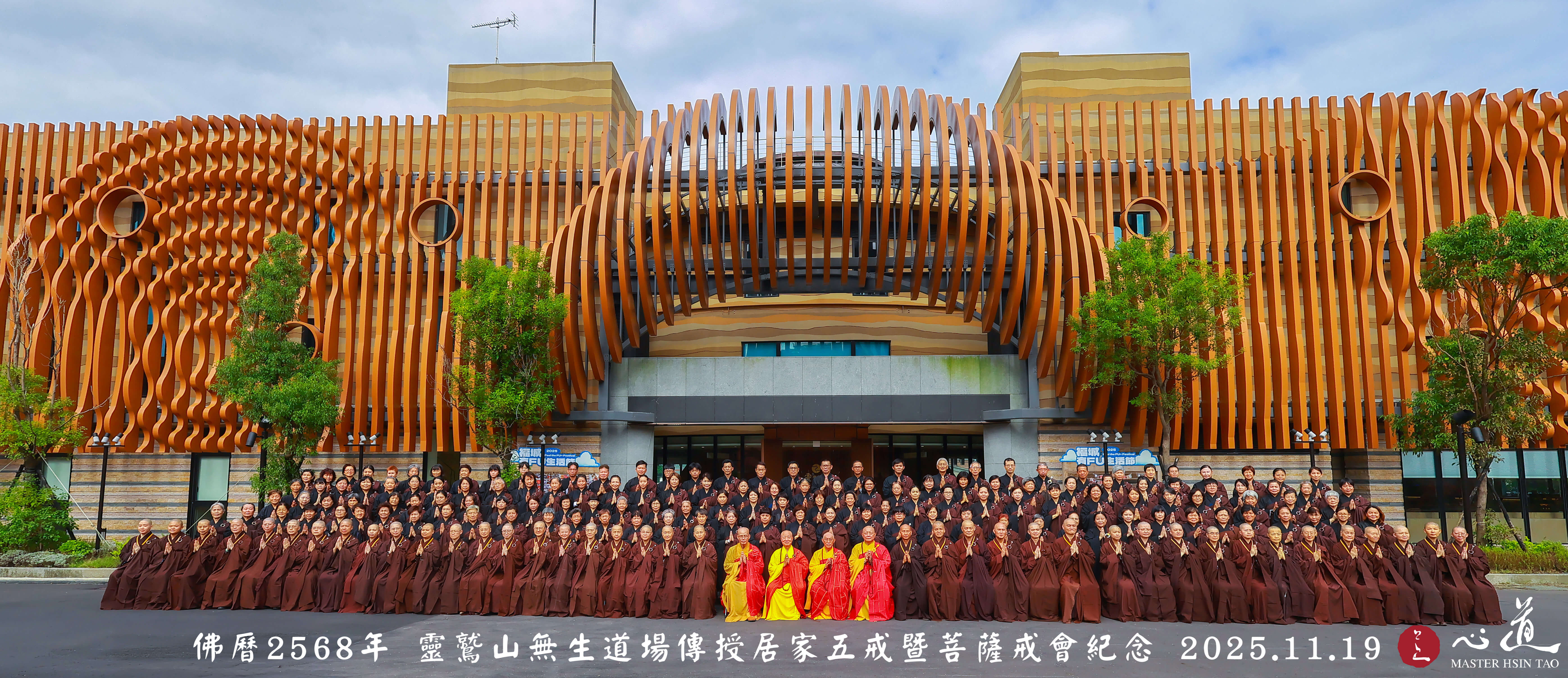 When the precepts are vigilantly upheld, the Buddhas of the ten directions will protect us at all times. At the end of life, right mindfulness will arise, and in every lifetime we will be accompanied by Bodhisattvas. The merit accumulated through the observance of precepts will surely come to fruition. Upholding the precepts is a means of accumulating vast merit, allowing us to encounter wholesome conditions throughout future lives. Thus, the precepts enable both present and future accomplishment, revealing our inherently pure Buddha-nature and leading us to become the Supreme Among Bipeds, perfected in both merit and wisdom.
Related
-

Upholding the Pure Precepts and Serving All Beings with Loving-kindness
-
The Water, Land, and Air Dharma Assembly: Sending Off Noble Beings, the Perfect Liberation through Collective Effort
-
The Water, Land, and Air Dharma Assembly: Receiving the Precept for the Deceased to Establish the Cause of Liberation