









2024.04.29
Integrating with the Mindstream of Guan Yin
 To recite and uphold the Great Compassion Mantra (Long Dharani), one must engender both bodhicitta and great compassion. These two minds, when brought together, constitute the mind of a Buddha. The noble eightfold path that we are to practice in daily life likewise cannot be separated from these two. As long as we are able to put bodhicitta and the practice of the Great Compassion Mantra into practice in our daily lives, we are practicing the noble eightfold path. In this way, every moment of our daily lives can be integrated with the Great Compassion Mantra, with bodhicitta, and with the mind of awakening. We can remain awake and aware in relation to all phenomena without becoming attached to or deluded by them. By reciting the Great Compassion Mantra, we can free ourselves from all forms of bondage, ignorance, and discriminating conceptions, and from all conditioned phenomena of arising and ceasing in life.
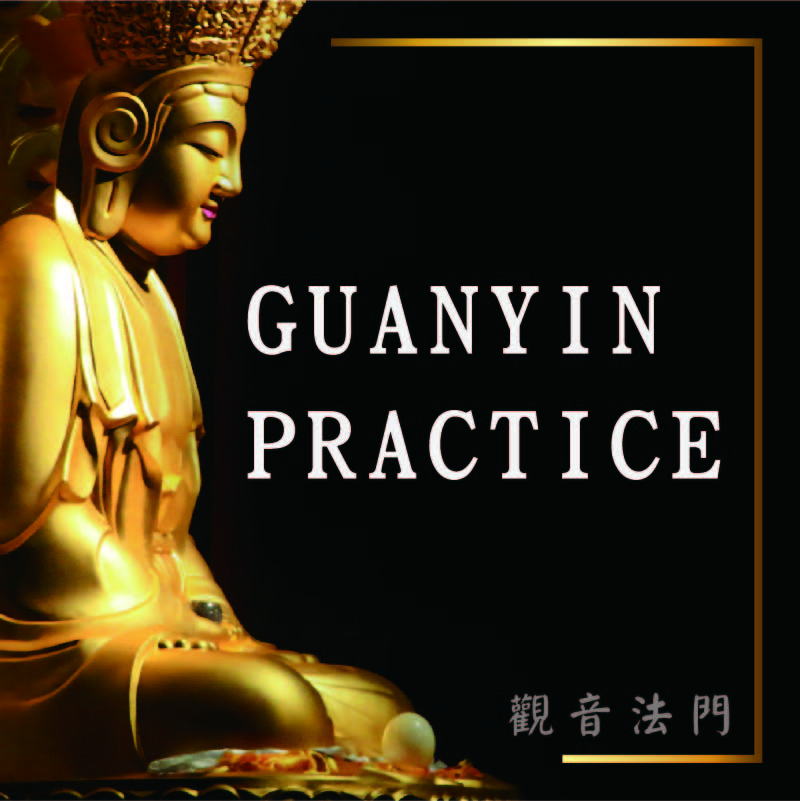
When we recite the Great Compassion Mantra, we are praying to Guan Yin (Avalokiteshvara), thereby supplicating to the compassionate mind of Guan Yin. In a Vajrayana term, this is commonly known as the “mindstream,” meaning that we bring the Guan Yin’s compassionate mind into the mindstream with our own, thereby generating greater strength to safeguard the peace of the Earth and to ensure that our companions throughout successive lifetimes may all remain at peace and free from suffering.
 The Great Compassion Mantra is capable of rescuing beings from all kinds of suffering in the world. Indeed, it is said that only the Great Compassion Mantra can liberate beings from the 84,000 forms of suffering. This is explained very clearly in the Dharani Sutra of Great Compassion. Therefore, as long as we practice the Great Compassion Mantra well, we need only employ this one method; with this one practice, we can overcome all obstacles. One method is sufficient. Thus, everyone should wholeheartedly recite the Great Compassion Mantra. We should not allow our minds to give rise to thoughts indiscriminately. Whatever we are doing, we should do it with full concentration and wholehearted attention, without continually thinking about what came before or what may come afterward. Otherwise, there will be little benefit. If we devote ourselves wholeheartedly and one-pointedly to what we are doing, we will receive positive responses and beneficial results. Amitabha!