











2023.08.16
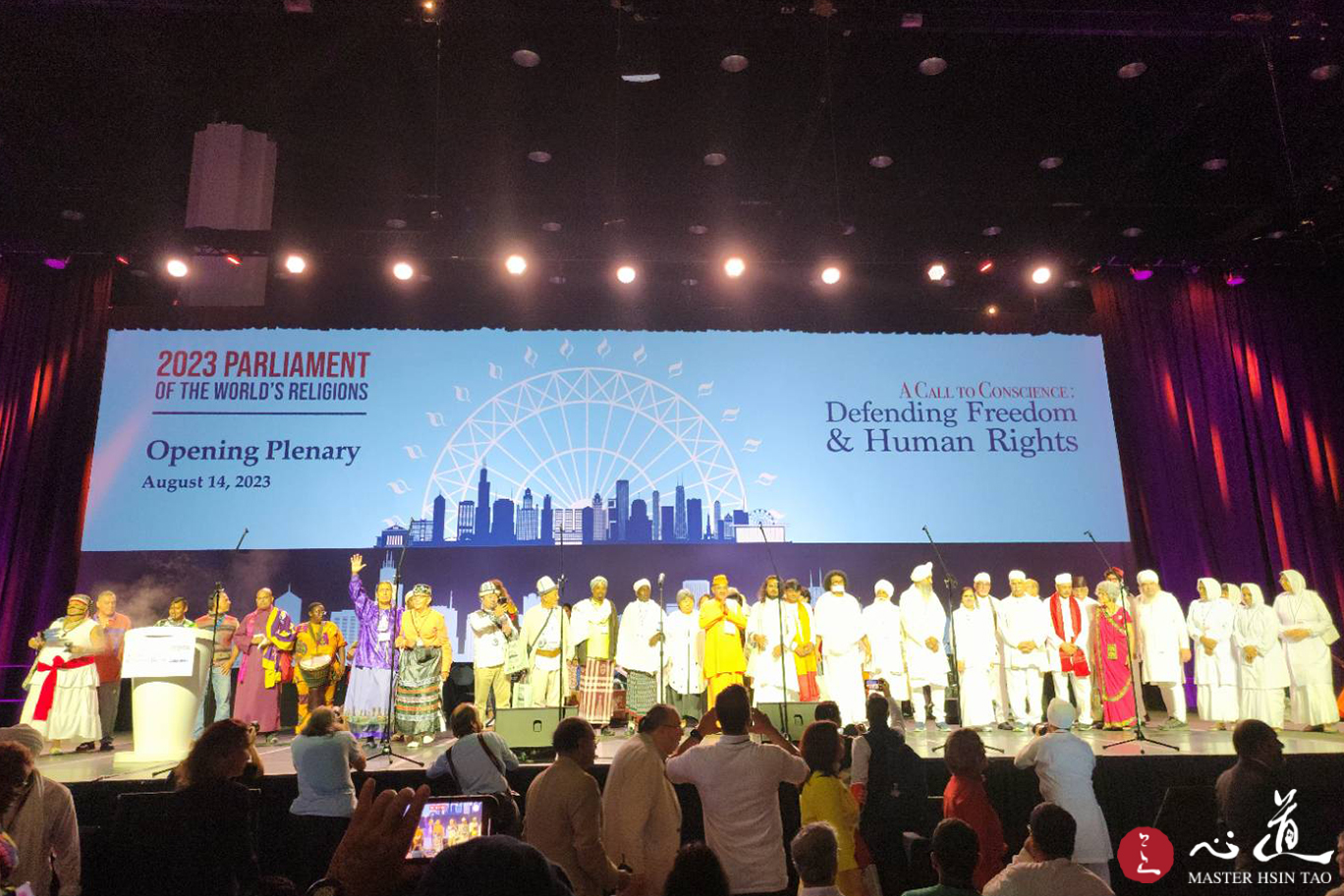
2023 PoWR—A Call to Conscience: Defending Freedom and Human Rights
Distinguished religious leaders, esteemed colleagues and friends from the religious community, I extend to you my respectful greetings and wish you auspiciousness and peace.
This year’s theme, “A Call to Conscience: Defending Freedom and Human Rights,” must be approached from the perspective of the sustainable development of humanity, for it bears paramount significance. At present, both the Earth and humankind stand at a critical juncture of survival. Global warming has led to the melting of polar ice in both the Arctic and Antarctic, with rising sea levels threatening to submerge landmasses. Prolonged wildfires in Canada have consumed vast forest resources over the course of months. Across the world, floods and droughts occur with increasing frequency, while torrential rains and hurricanes bring recurrent devastation. The use of weapons in warfare and nuclear weapon development further accelerates the warming of the planet, drastically turning the Earth into a huge furnace. The natural cycle of the four seasons—spring, summer, autumn, and winter—is increasingly disrupted; plant seeds are unable to germinate; and a global food crisis is already emerging. These are not distant challenges but immediate realities. How, then, can we fail to seek solutions to transform this situation? Although governments, the business sector, and the technological community worldwide have already initiated responses—while international organizations such as the United Nations and UN Climate Change Conference (COP) continue to deliberate and pursue solutions, including the advanced development of AI—I wish to emphasize that all such efforts must be grounded in spirituality and vigilantly guided by ethical principles, lest they further damage the ecological balance. Technology and policy can only address symptoms; the fundamental remedy lies in the awakening and transformation of the human mind.
 What, then, must awaken and transform? It is the understanding that spirituality and ecology are inseparable that “spirituality is ecology; ecology is spirituality.” They are in oneness, characterized by equality and partnership rather than exploitation. One must respect the intrinsic value of all beings, embrace the space for coexistence, and together build a world of shared fulfillment. This embodies the principles of interdependent diversity, interconnectedness, and mutual support for thriving. Such principles constitute the common root of life and may be understood as the “ecological DNA.” Within spirituality, all phenomena are interlinked, forming an interdependent entity. Awakening to this spiritual understanding and applying it in daily life is essential. A collective awakening of the human mind represents the last opportunity for the survival of humanity.
There is but one Earth. Continued ecological destruction will lead to collective extinction. Therefore, I once again sincerely call upon all present to cultivate spiritual awakening and to engage in cross-sector collaboration. Beginning with the religious community, we must work together to promote this spiritual awakening, encouraging those who inflict harm to reflect and reform, and to unite our efforts in restoring ecological balance and resolving the ecological crisis. At the same time, we must bring an end to war and ensure the elimination of nuclear weapons. Only in this way can we alleviate the existential crisis confronting both the Earth and humanity, and restore a clean, peaceful, and sustainable living environment. This alone constitutes the true realization of freedom and human rights.
I am currently preparing the University for Life and Peace in Myanmar, integrating a spiritual worldview with ecological conservation into a comprehensive system of practice. Its aim is to cultivate interdisciplinary talents who, grounded in a shared vision, will take these principles into concrete action to address global challenges. In conclusion, may spiritual awakening generate the transformative power necessary to bring about ecological harmony and beauty, and a world of peace free from conflict. Only through ecological sustainability can humanity itself endure. Amitabha!
♦ Read more about Master Hsin Tao and Parliament of the World's Religions