







2023.01.06
Contemplative Observation Throughout Daily Life
 With our Dharma practice, every moment is a movement from this shore to the other shore. Awakening is the other shore; non-awakening is this shore. All that appears is “form,” which encompasses all phenomena, objects, persons, and events, and all of these are impermanent and merely fabricated appearances. As the Heart Sutra states, “form is emptiness”; every instance of form is emptiness. Since form is emptiness, why not let go of it? Why are we so entangled as to give rise to worries, sorrow, and affliction with such entanglement? The six kinds of kinship relations are all chains; the emotional bonds with family and friends become obstacles to our awakening. Our emotions are like hooks—filled with conflict, irrationality, and reactivity; wherever they latch on, there arises mental disturbances and attachment. Only through awakening can we live clearly and openly in the light of day; without awakening, one lives in dullness and delusion.
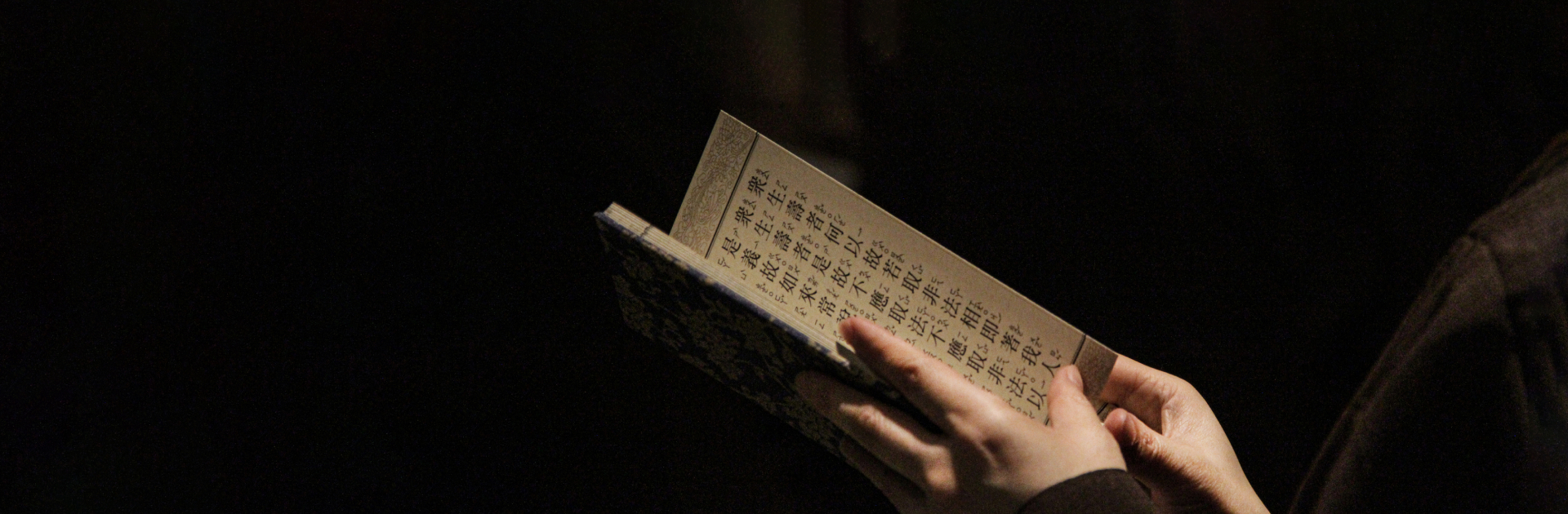
Only when there is contemplative observation within the flow of daily life do we perceive a simple self and live with ease and freedom. Without such contemplative observation, one does not encounter those who are liberated, those who are unpretentious, or those free from affliction. Through contemplative observation, defilements can be transformed into the realization of the notionlessness of self, person, sentient being, and lifespan. Who am I? Who is the person? Within contemplative observation, all such conceptual constructs dissolve—form itself is emptiness. The Heart Sutra states: “While practicing the profound prajnaparamita, saw in this way: he saw the five aggregates to be empty of nature.” How are the five aggregates of emptiness? How does our attachment become of emptiness? It is through contemplative observation that the five aggregates can be realized as of emptiness. Such observation is a mode of Dharma practice, a method that brings clarity and enables spiritual transcendence, leading us to realize the state in which “form is emptiness.” To realize all forms as emptiness is wisdom; endowed with such wisdom, one can enter water without being submerged and enter fire without being burned. Thus, in daily life, one must engage in contemplative observation; when such observation is well established in ordinary circumstances, practice becomes highly efficacious.
 Therefore, prajna wisdom consists of contemplative observation: only through such practice can one realize nirvana, resonate with the miraculous powers or supercognitions, and open the wondrous gateways of the inner mind. Prajna wisdom entails consistent observation that form is emptiness—this is Dharma practice and the wisdom that brings liberation. Conversely, “emptiness is form” pertains to the accumulation of merit: from within emptiness, compassion arises, and one bestows the loving-kindess of emptiness upon all sentient beings so that they too may reach the other shore of liberation. Hence, we must constantly transform ourselves while enabling all beings to awaken and let go. Emptiness is form; form is emptiness; form and emptiness are nondual. Merit and wisdom, likewise, are nondual. Even now, we dwell within form—yet form is emptiness, and all phenomena are of emptiness in nature; this is something to be gradually realized.