




2026.07.21
Kicking the Stone, Striking Awakening
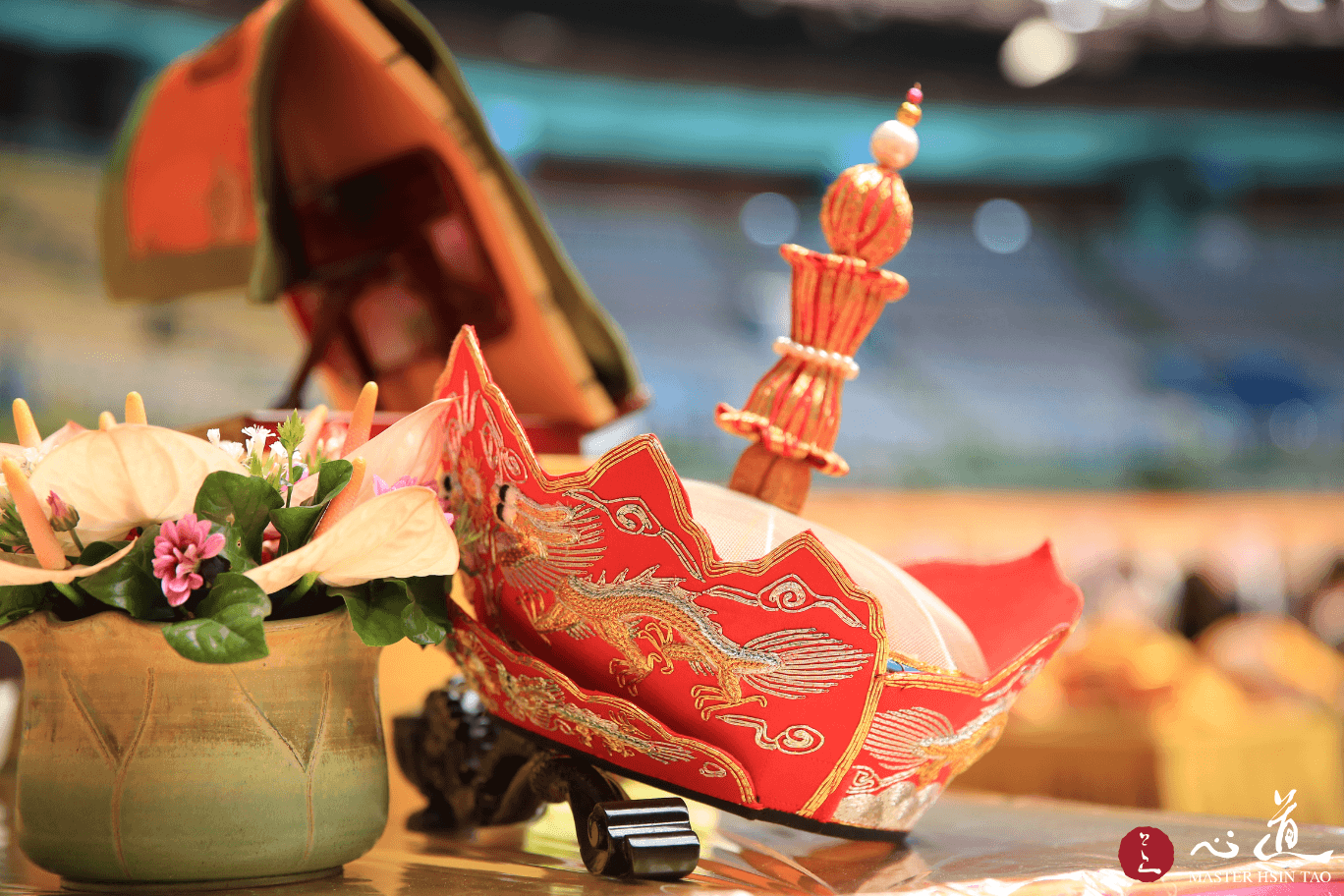 The Water, Land, and Air Dharma Assembly is one of Ling Jiou Mountain’s largest and busiest annual Dharma events. People return to Taiwan from many different places to participate in this grand assembly, making it a joyful occasion when members of the entire Ling Jiou community can gather, interact, and practice together.
Each year we organize the assembly in the same manner, hoping that everyone will grow throughout the event. Through our work and participation in the Dharma assembly, we gradually reflect upon ourselves, transform ourselves, and elevate our inner qualities. Dharma practice is fundamentally the purification of the mind: making one’s mind clean and lucid, allowing it to remain luminously pure and free from defilement, and applying compassionate care through one’s work.
 Within the Water, Land, and Air Dharma Assembly, everyone must be vigilant in safeguarding their body, speech, and mind. Each individual should conscientiously and diligently fulfill his or her assigned responsibilities. To devote oneself wholeheartedly is itself a source of merit. Therefore, everyone should approach their respective duties with complete dedication and careful attention. Consequently, whether devotees or anyone else, as soon as they enter the Water, Land, and Air mandala, their minds naturally become disciplined and at peace, thereby opening the way to the experiential insight into Dharma practice. What is meant by “experiential insight”? Whether during the Dharma assembly or while carrying out one’s work, the mind remains continuously aware—quietly attentive, focused, and meticulous. Who knows? Perhaps one may inadvertently attain enlightenment. Some people attained enlightenment by kicking a stone, a sudden strike to realization. In history, certain Chan masters attained awakening by a sudden kick to a stone; others attained awakening by kicking a bamboo stalk. But what was it that “kicked” the stone? What was it that “kicked” the bamboo stalk? With what does one kick them in order to awaken? When the mind lacks concentration, one merely kicks the bamboo. But when one’s attention is entirely gathered, one touches the mind itself. One touches awakening.
 Therefore, I hope that everyone, through their work, will come to experience their own mind. This is precisely what Chan is. What is Chan? It is like the koan, “The cypress tree in the courtyard.” Is this not the same as kicking a stone? Whether one kicks a stone or bamboo stalk, what is it? It is likewise “the cypress tree in the courtyard.” In other words, one encounters the mind itself. Thus, at every moment, everyone should continually turn inward and observe the mind. Only in this way can one become a practitioner who embodies Chan practice at all times and in every place.