








2026.10.02
Chan Practice Q&A: The Sound of Silence
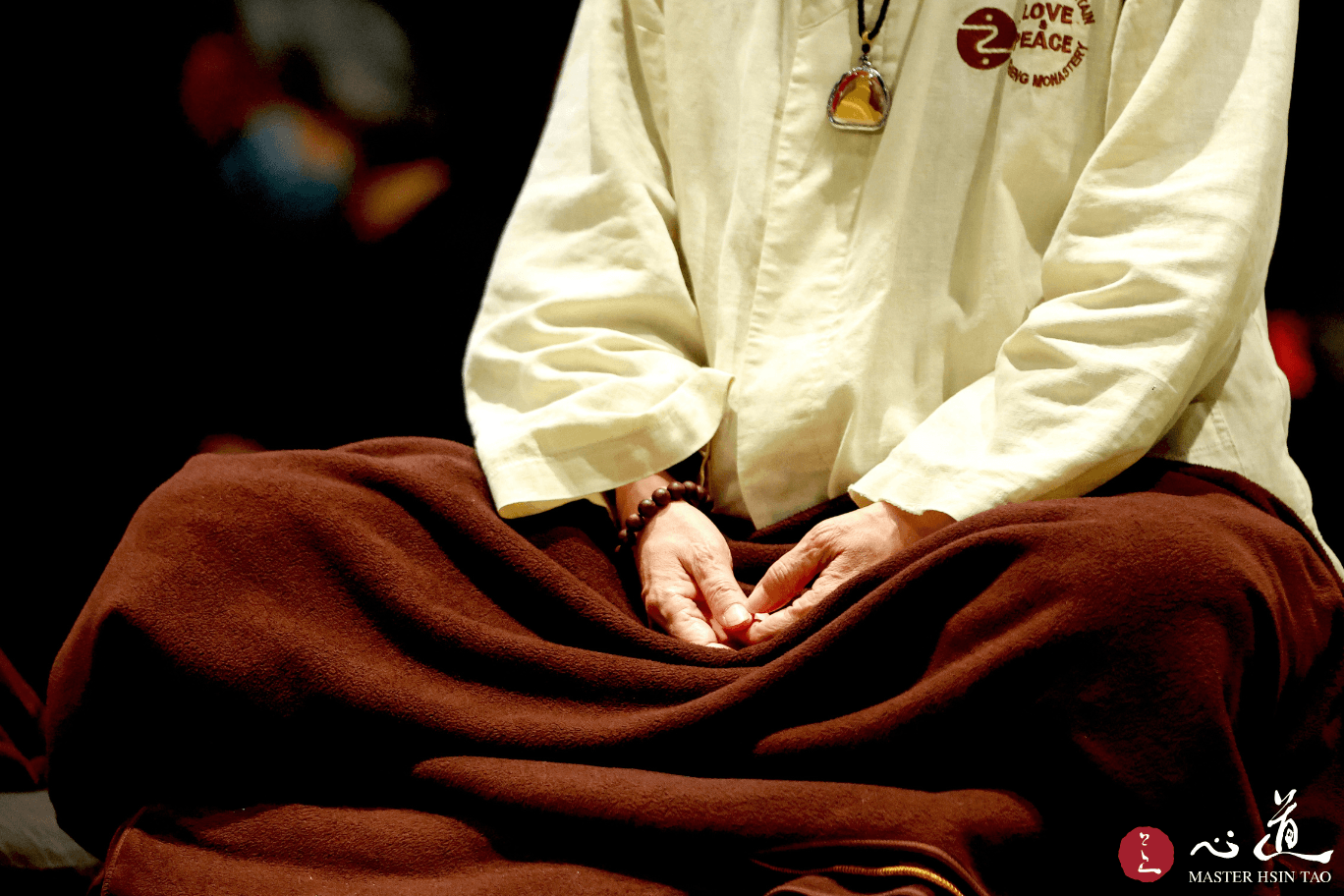 Disciple: In the section on listening to silence in the Four-step Technique of Peace Meditation, this initially seems rather abstract to us. How can we practice it practically so that we can gradually come to realize it through experience? Also, when we practice at home, there are often many distracting thoughts and external disturbances. Is there a way to approach this practice more easily? Otherwise, it is very easy to give up after practicing only a few times.
Master Hsin Tao: We can conduct an experiment. When we hear the loud and noisy traffic on the street, we can remind ourselves that all these noisy sounds are actually silence. Listen again, and the noise is no longer noisy. “Every phenomenon is projected by the mind.” When your mind recognizes tranquility, everything is tranquil. For example, when an airplane is taking off and there is noise outside, everything is tranquil. You have already transformed it under tranquility.
What is quietness? It is the absence of sound. What is silence? It is the utmost absence of sound. The sound of having no sound is called the sound of silence. Whatever sounds we perceive, we say, “Look, this thing is silent!” If we examine it in terms of scientific molecules, it is noisy; but the molecules themselves are silent. Even when all the molecules are broken down and no longer exist, there is still silence. So what is silence? Every existent has an aspect of tranquility; and whatever does not exist likewise has no sound produced by such a combination. This—the sound of having no sound—is called the sound of silence.
When we listen to the sound of silence, we listen to any sound until we hear its silence. Take the floor, for example. I often say that the floor has no sound. If your mind is relatively agitated, you will not be able to listen peacefully to the sound of the floor. If you practice this repeatedly, going back and forth several times, you will gradually become more peaceful. What is called the sound of silence is precisely the soundless sound.
 In the Chan tradition, there is a famous Chan encounter known as “the sound of one hand.” What do you hear when you listen to the sound of one hand? Do you hear anything? The sound of one hand is precisely no sound.
There was once an old monk whom people would approach to request Dharma teachings. Whenever someone came to ask for instruction, the old monk would simply raise one finger. The visitor seemed to gain some inspiration and would happily return home. A young monk who lived with the old monk began imitating him. One day, when the old monk was away, someone came to request Dharma instruction. The young monk likewise raised one finger before the visitor, who happily returned home. After that, the young monk repeated the same behavior. One day, the old monk summoned the young monk and asked him, “When people come to ask for Dharma teachings, how do you respond to them?” The moment the young monk raised his finger, the old monk took a knife and cut it off. The young monk immediately ran about, crying and screaming in pain. The old monk called him back and asked again, “When people ask you about the Dharma, how do you respond?” Without thinking, the young monk once again raised his hand. When he saw that the finger was no longer there, he suddenly attained realization.
So why is it called the practice of silence? It is not a matter of listening to whether something exists or does not exist. It is simply listening—listening to silence. Silence is the soundless sound, the sound in which there is no sound. What are you all listening to? If there is something to hear, it does not count; only when there is nothing to hear is it genuine listening.