









2009.03.29
The Second World Buddhist Buddhist Forum: The Establishment and Introspection of Buddhist System of Practices and Studies
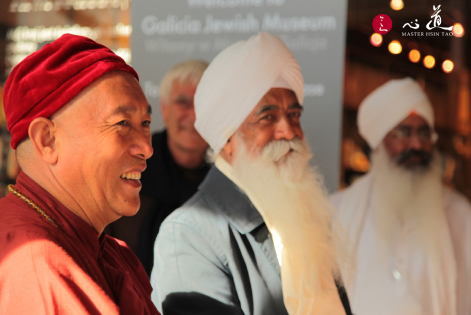
 On March 29, 2009, I was invited to Wuxi, Jiangsu, to participate in the six-day Second World Buddhist Forum. This forum was jointly organized by the Buddhist communities in Mainland China, Taiwan, Hong Kong, and Macau—the Buddhist Association of China, the Buddha’s Light International Association, the Hong Kong Buddhist Association, and the China Religious Culture Communication Association. Convened in both Wuxi and Taipei in 2009, the forum comprised seventeen sub-forums covering a wide range of topics, including the dissemination of Buddhism, spiritual ecology, education, music, and science. It marked the first large-scale international, multilateral religious forum organized through non-governmental collaboration across these regions.
The purpose of the Second World Buddhist Forum was to establish a platform for mutual exchange, cooperation, and dialogue among Buddhists worldwide, thereby providing a valuable opportunity for international Buddhist engagement. The theme of this forum was “A Harmonious World Through the Interdependence of Conditions.” During the forum, additional events were held, such as the “Thousand-Monk Offering Ceremony: An Experiential Journey into Chinese Monastic Dietary Culture,” as well as exhibitions of Buddhist artifacts, calligraphy, and pictorial art. These activities showcased the profundity and breadth of Buddhist culture from multiple perspectives, while also revealing the extraordinary beauty of five millennia of Chinese civilization. More than one thousand representatives from approximately fifty countries and regions attended the conference.
Through this forum and its dialogues, we gained a deeper understanding of the teachings of the Tripitaka and engaged in discussions on comprehensive systems of education and learning. It is our hope that the Buddhist community will commit itself to cultivating the knowledge, insight, and vision of the next generation of monastics. On the international stage, we shall strive to unite the Buddhist community, promote the Triyana, and contribute to world peace.
Respected elders, venerable masters, and distinguished friends from religious and academic communities across the globe: Greetings! Amitabha. It is a great honor to share with you, in this solemn and auspicious setting, my topic today: “The Establishment and Prospects of Buddhist System of Practices and Studies.”
The latent crises of modern civilization originate in the disorientation of the human mind. People relentlessly pursue external desires while turning a blind eye to their inner spiritual life, ultimately bringing incalculable harm upon themselves and their environment. The fundamental spirit of Buddhism lies in the pursuit of an awakened life and a world of right awakening. It guides people to recognize the illusory and insubstantial nature of the external world, as well as the inverted and impermanent character of inner desires. In this way, it offers an effective remedy for establishing both existential stability and inner peace, and for realizing the full intrinsic value of human life.
This remedy may be described as a “Buddhist System of Practices and Studies,” for it articulates a coherent set of core principles and practical methods. It transforms the endless tendency to “seek outwardly” into a state of ease and clarity characterized by “turning inward,” thereby returning one to the depths of one’s own inner mind.
The most important aspect of Buddhist practice lies in the initial generation of intention. Once bodhicitta has been engendered, it must be actualized through the training in ethical discipline, meditative concentration, and wisdom. Ethical discipline forms the foundation of all virtues; it enables continuous vigilance and reflection of one’s mental activity and constitutes the prerequisite for spiritual cultivation. The training in meditative concentration, grounded in the proper observance of ethical discipline, gradually purifies the defilements of life, allowing one to enter meditative absorption and sustain the luminosity of awareness. The cultivation of wisdom arises through hearing and contemplation upon the teachings of the Dharma; yet this must be further stabilized through contemplative observation with clarity. By contemplating the dependent origination and emptiness of all phenomena, one attains genuine wisdom. In addition, one must establish faith in the Buddhas and Bodhisattvas—just as one has faith in the innate luminosity of one’s own mind. This luminosity is none other than compassion for all sentient beings; through the practice of the Bodhisattva path, this awakened awareness is gradually actualized.
The educational vision honored and transmitted at Ling Jiou Mountain aspires to “transmit all Dharma teachings for the benefit all sentient beings.” From the very initial stage of founding society, its first major undertaking—the establishment of the Museum of World Religions—embodied the concrete expression of bodhicitta. It also reflects the aspiration, in this age of globalization and pluralistic civilizations, to widely propagate the Buddhist philosophy of a “harmonious world” through networks of interfaith dialogue, thereby fostering peace on earth and harmony among all peoples.
I myself was an orphan born amidst the ravages of war, and from an early age I experienced the suffering and impermanence of life. Through ascetic practices among burial grounds, fasting, and retreat, I sought to realize the path of liberation from samsara and nirvana. On this basis, I developed a Four-stage Training and propagation of the Dharma, modeled on the pedagogical progression of the Buddha—from the realization elucidated in the Avatamsaka teachings to the foundational instruction of the Agama:
First, the Agama Stage, which cultivates beginners, training them to become monastics and suitable vessels of the Dharma; its primary focus is the “cultivation of monastic qualities and aspiration.
Second, the Prajna Stage, which establishes fundamental right view and teaches how to apply the Dharma in daily life and responsibilities; it emphasizes the cultivation of the wisdom-life of the sangha.
Third, the Saddharmapundarika Stage, which emphasizes the practice of the bodhisattva path for the benefit of beings; it focuses on arousing, strengthening, and fulfilling the vows of bodhicitta.
Fourth, the Avatamsaka Stage, which cultivates mature practitioners endowed with a comprehensive worldview, capable of leading and sustaining a community; it aims at the integration of experiential power, scholarly expertise in Buddhist studies, and expansive capacity for teaching and transformation. Each of these four stages is grounded in scriptural authority. Although they are presented sequentially, the entirety of learning and practice never departs from the immediacy of the true mind and bodhicitta.
Having spent more than three decades in monasticism, I have come to understand that while a structured progression in Buddhist cultivation is necessary, it must also retain flexibility. The Triyana can be practiced in a mutually integrated and consummate manner, accomplishing the realization of an “inner arhat” and an “outer bodhisattva.” At Ling Jiou Mountain, the Four-stage Training is integrated into daily life and embodied in various activities conducted over the years. Its central aim is to guide and receive sentient beings into the path of Buddhist practice, enabling them to engage in both the meditative progression of the “inner arhat” and the compassionate activity of the “outer bodhisattva.” Together, these form a virtuous cycle leading to boundless liberation and a harmonious world.
Today, in this auspicious assembly, I humbly present to the esteemed elders my personal experience in practice and the propagation of the Dharma. It is my hope that the dissemination of Buddhism, in this age of dialogue, will foster sincere interaction and genuine harmony. I am delighted to share my experience in Buddhist practice and look forward to mutual exchange and collective accomplishment.
May blessings and auspiciousness be perfected for all present and for this great assembly. Amitabha! May the Three Jewels bestow their compassionate blessings.