









2026.08.28
Life as a Field of Merit
 People are like this: when you are in a good mood, the whole family is well; when you are in a bad mood, the whole family suffers. Thus, within a family, we should often bring happiness to one another. Even when we are not happy, we should strive to restore and harmonize an atmosphere of happiness, so that whenever someone enters the home, they encounter vitality and joy. We may not be particularly wealthy, but at the very least, we can eat happily and dress happily. Happiness does not require wearing beautiful or expensive clothes; if what you wear is comfortable, you can be happy. Thus, in life, we should cultivate contentment and joy. Does cultivating contentment and joy mean that we should simply stop striving? Certainly not. Contentment serves as our support, while joy enables us to strive actively. Once we have cultivated contentment, we should continue to work diligently with a joyful disposition—that is, to strive with optimism and vitality. This is the proper way to live.
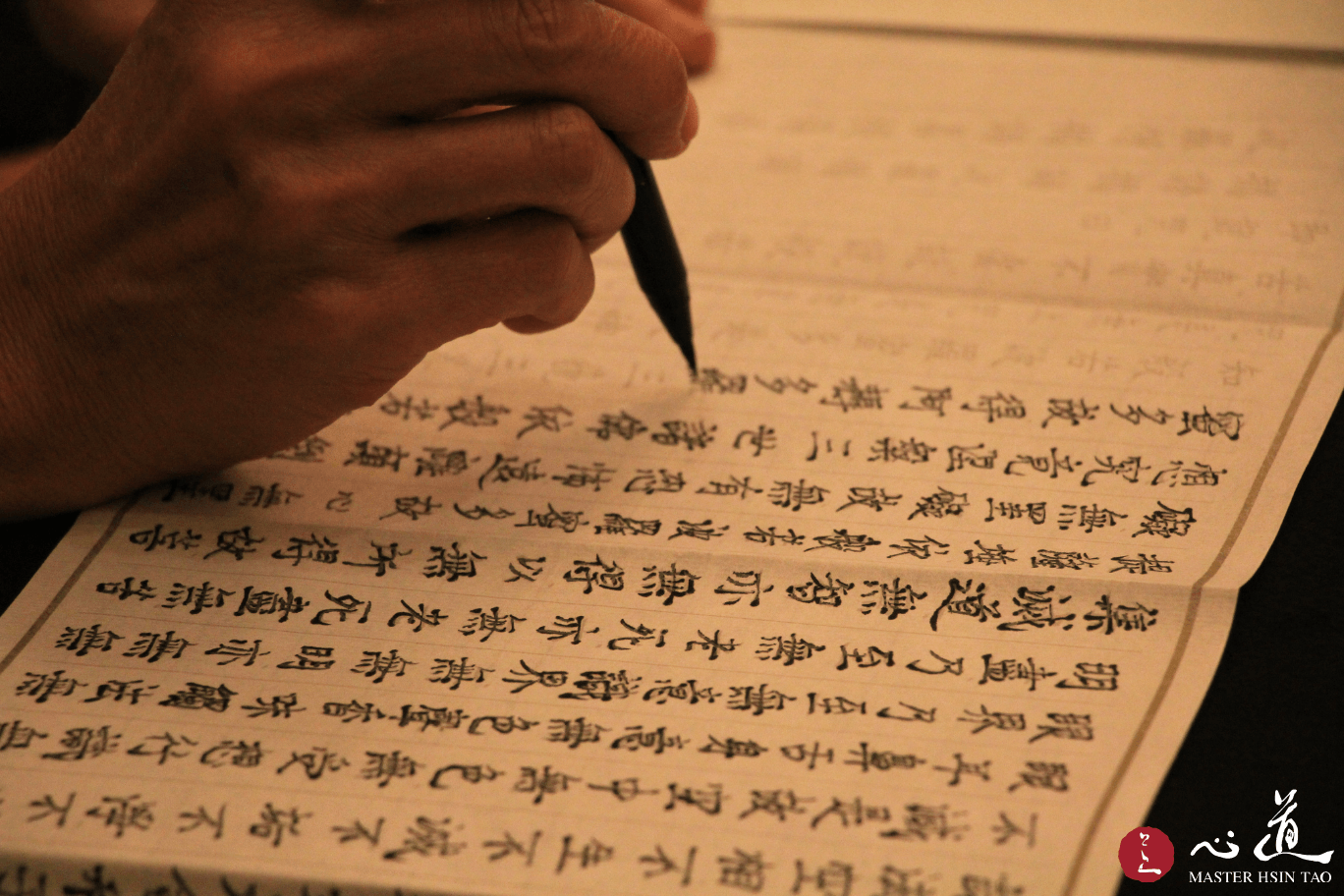
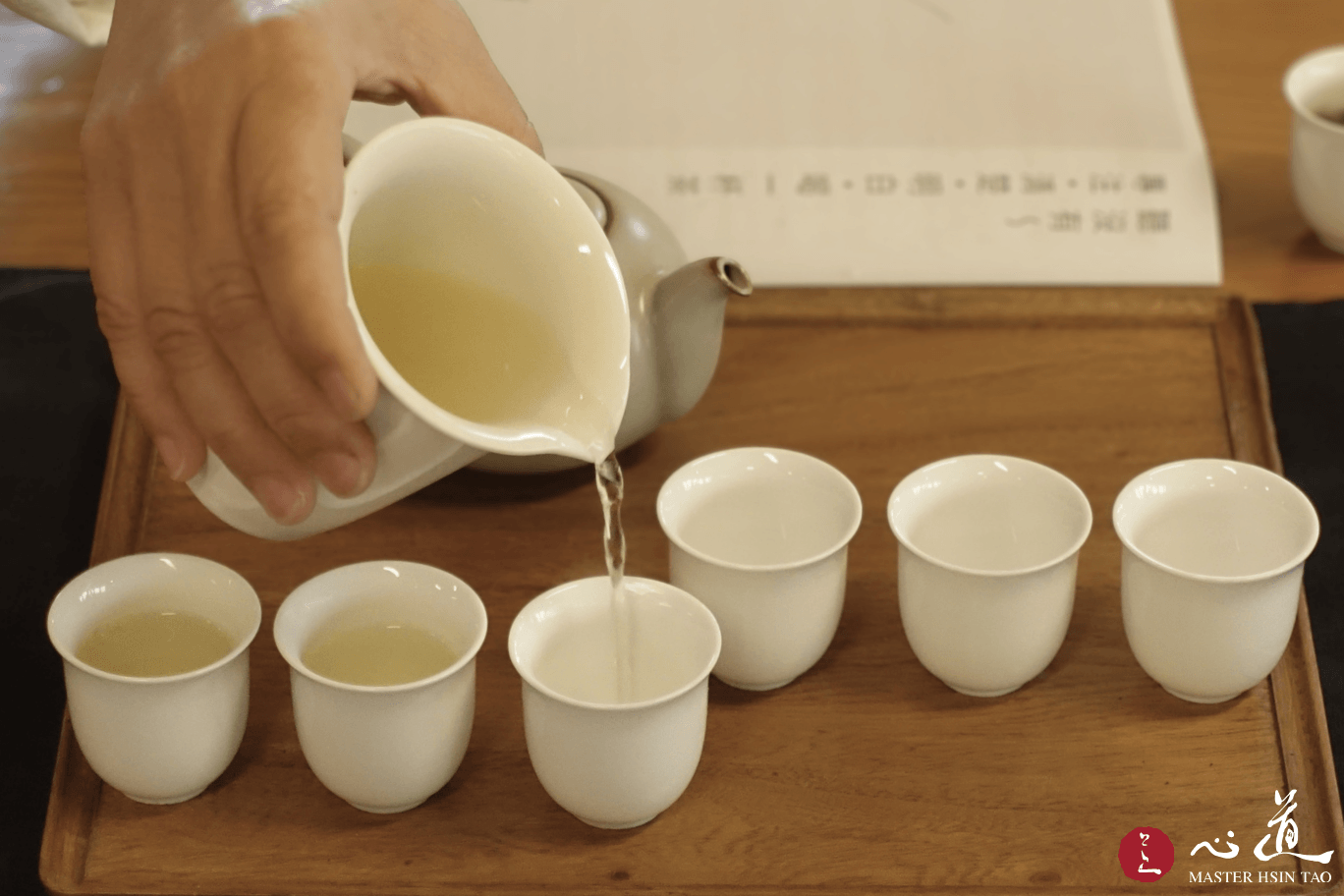
Yet this is easier said than done. In fact, it requires practice. Since we study and practice Dharma, we must engage in practice. I have often offered two particularly suitable methods of practice. Unlike monastics, householders generally cannot withdraw into retreat or rely upon a monastery or other dedicated place for practice. As householders, we have meals to prepare, children to care for, and countless other responsibilities that must be attended to. Who will do these things for us? No one. So where are we to find the time for practice? In reality, we have very little time. I have therefore discovered a form of practice particularly suited to our circumstances: “Work itself is practice; life itself is a field of merit.” Our way of practicing is to regard our daily life as a field in which merit can be cultivated. Every person we encounter is our field of merit; every person provides the ground upon which we can cultivate and sow the seeds of merit and wisdom. Likewise, in our work, we must cultivate patience and endurance, be willing to undergo hardship, and develop self-discipline and inner refinement if we are to accomplish our responsibilities well. Conflicts inevitably arise between people in the workplace, and therefore we must cultivate a capacity for tolerance, as well as respect and love. Consider this carefully: does all of this not itself constitute Buddhist practice?
 Why should we approach our work according to the principle that “work itself is practice, and life itself is a field of merit”? Because we are beings within samsara. What if we are unable to attain rebirth in the Western Pure Land of Amitabha (Sukhavati)? What are we to do then? We will still have to make our way through this Saha world. What basis do we make our way through it? Naturally, we do so according to our karma and its causes and effects. Each of us has taken rebirth as a human being because of the many causes and karmic conditions we created in the past. Why have we been able to obtain a human body? Because we performed virtuous deeds and thereby accumulated sufficient merit to obtain this excellent human body as a “house” in which to dwell. When our merit is insufficient, however, we may be born with physical deficiencies. One might then wonder, “How strange—why is my bodily house missing this part or that?” Some people can hear with one ear but not the other; others may have some feature of the mouth or face that they wish could be improved. In this sense, the “house” of our body has not been constructed completely because we have not accumulated sufficient merit.
Therefore, while being in this world, we should continually cultivate our field of merit through our daily lives. When we have accumulated sufficient merit, our physical faculties will be intact, and our five sensory faculties will be more fully developed. This too is the result of merit. If we cannot make it to Sukhavati, then at least we should make the best of our circumstances in the Saha World. Thus, “work itself is practice, and life itself is a field of merit.” We should not merely pay lip service to this principle; we must put it into actual practice. For this is precisely the practice of the bodhisattva path: cultivating loving-kindness, compassion, joy, and equanimity—the four immeasurables—through our daily activities. In this way, we embody the activity of Guan Yin (Avalokiteshvara) and walk the path following Guan Yin.