







2024.10.21
2024 World Buddhist Forum—Returning to Spirituality for the Common Good and Safeguarding Shared Ecological Flourishing
 I. Introduction
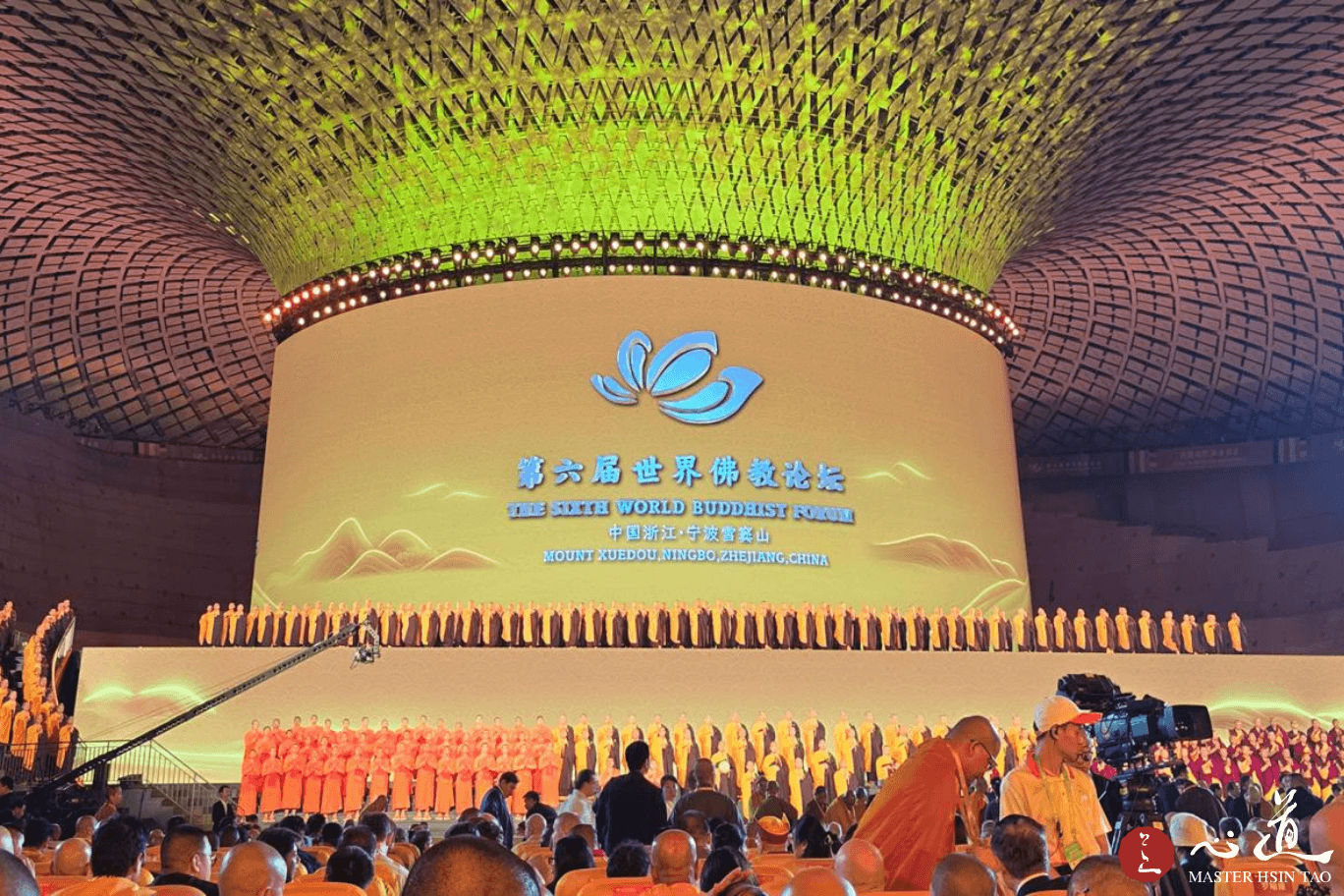
We’d like to express our sincere gratitude to the Buddhist Association of China and the Chinese Religious Culture Communication Association for jointly convening the Sixth World Buddhist Forum. Centered on the theme “Hand in Hand for Coexistence,” the forum brings together eminent elders and distinguished scholars to deliberate on the development of contemporary Buddhism and its potential contributions to addressing pressing global challenges. The theme “Hand in Hand for Coexistence” aptly expresses the fundamental intent of the Buddhadharma. Grounded in compassion and wisdom, the Buddhadharma adopts an inclusive and expansive perspective, taking as its practical application of the two goals of benefiting oneself and others, guiding sentient beings free from suffering and toward the ultimate happiness. At present, the most urgent global issue concerns how to resolve ecological degradation and the climate crisis. In this regard, I wish to offer my observations and an earnest appeal.
 II. Ecological Perspectives in Traditional Chinese Culture
Concern for and protection of life and ecology have long been deeply rooted in Chinese culture. The myth of Pangu presents a phenomenal account of ecological origins: Pangu separated heaven and earth from the original chaos, stabilizing the cosmos over vast epochs, and ultimately transforming his own body—head, limbs, blood, breath, flesh, and hair—into the sun, moon, stars, mountains, rivers, vegetation, and all living creatures. This narrative reflects an early human vision of a harmonious, pristine, and organically integrated natural world. Similarly, the Classic of Mountains and Seas records numerous accounts of immortals, phenomenal beings, rare animals, diverse customs, and varied landscapes. These accounts reveal the respect, inspiration, and admiration with which early peoples regarded the rich diversity of life, as well as their awe toward the processes by which all things emerged from nothingness into being.
Within the core traditions of Chinese culture—the Three Philosophical Systems of Confucianism, Daoism, and Buddhism—respect for ecology has always been a central concern. Confucianism upholds the idea of “universal benevolence toward the people and kindness for all beings, reverence for heaven and love for humanity,” affirming “the unity of humanity and all beings.” Daoism, guided by the principle that “the way follows nature,” understands that “the myriad existences arise together, and I observe their return; everything flourishes, yet each returns to its root.” Buddhism emphasizes the “equanimity of the dharmadhatu,” with the belief of “extending compassion toward all by regarding all beings with the compassion that extends to all beings because of our shared essence,” to all forms of life. Thus, the Three Philosophical Systems approach ecological life through a dialectical understanding of the relationships between humans and others; humans and nature; and individuals and the whole. Their theories and practices are grounded in the values and methodologies of “the unity of heaven and humanity; the way follows nature; and harmony in diversity.”
 III. Contemporary Crises and Solutions
Today, the most severe global challenges include climate anomalies and ecological deterioration. Natural disasters—storms, wildfires, floods, and droughts—are increasingly frequent; glaciers are melting, seasonal cycles are disrupted, and both habitats and ecological patterns are being severely damaged. Socially, the dominance of profit-making and the blind pursuit of capital maximization have generated widespread disorder. Internationally, conflicts persist, and the threat of nuclear war looms. These developments place both humanity and all forms of life in grave existential peril. We must therefore ask: what is the root cause? The answer lies in the human mind—more precisely, in a crisis of spirituality.
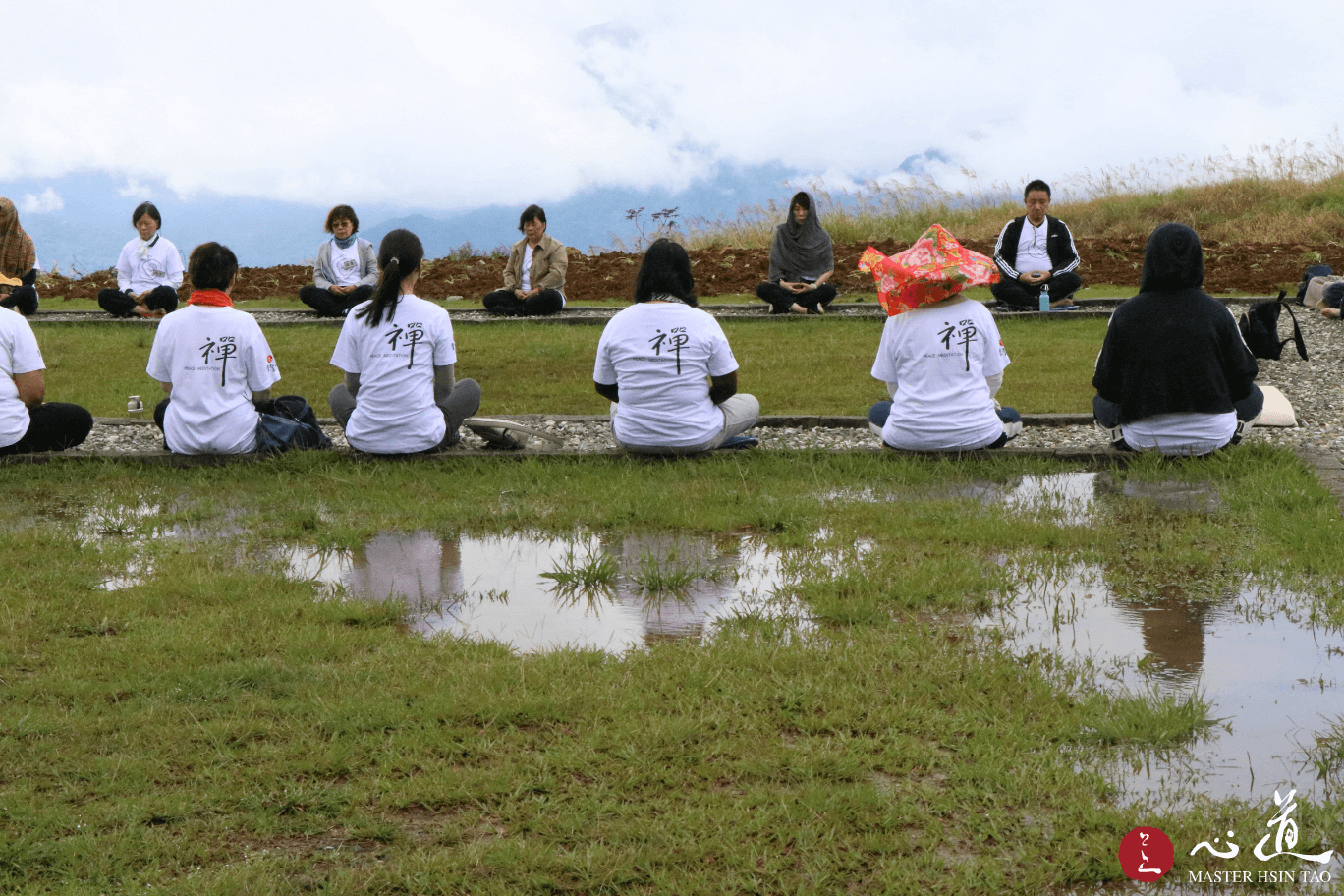
Confucianism, Buddhism, and Daoism all emphasize the cultivation of the mind, seeking to realize “unity between heaven and humanity,” and “the way follows nature.” For instance, Mencius speaks of “I strive at upkeeping my Noble Spirit,” while the Great Learning outlines stages of moral cultivation through “stillness, stability, tranquility, reflection, and attainment.” The Dao De Jing advocates “reaching the ultimate of emptiness, deeply guarding stillness,” while the Constant Purity and Tranquility states that “If one is constantly pure and tranquil, all of heaven and earth will revert to him.” In Buddhism, particularly in Chan, the tradition is known as the “school of mind,” where contemplative awareness arises through the integrated practice of shamatha (calm-abiding) and vipashyana (insight), revealing the luminosity of mind. Through such cultivation, individuals return to an original goodness—an uncovering of the innate purity and goodness of the human mind. This is, in essence, a return to the universal aspiration for pure spirituality and primordial awareness.
Spirituality may be understood as the aspiration toward the purest and excellent state of human mind. To return to spirituality signifies a transformation from the pursuit of material desires toward the elevation of life itself. Ontologically, spirituality represents the metaphysical ground of being and the governing principle of all phenomena. In Daoism, it is termed the Dao; in Confucianism, Heaven; in Buddhism, buddha-nature. It signifies both an ascent from material attachment to spiritual awareness and a liberation from the constraints of desire. From an ethical and practical perspective, spirituality constitutes a process of human inner evolution, the establishment of higher moral standards, and a profound aspiration toward a meaningful and elevated life.
 IV. Returning to the Purity and Harmony of Spirituality
From the Buddhist perspective, human beings, deluded by material desires and misconceptions, give rise to the five poisons—greed, aversion, ignorance, pride, and doubt—which disrupt both the integrity of the mind and the balance of the ecological elements: earth, water, fire, wind, and space. These afflictions obscure consciousness and sever our intrinsic connection with the wholesomeness of life. Greed fuels endless acquisition and conflict; aversion breeds hostility and division; ignorance fixates on possession; pride fosters self-centered arrogance; and doubt generates suspicion and mistrust. As a result, humanity disregards the value and meaning of ecological life, engaging in relentless exploitation of the Earth’s resources. This leads to the breakdown of natural systems and the destruction of ecological balance, with consequences that are already occurring: disrupted seasons, failed reproduction cycles, species extinction, and ultimately, the collapse of human survival itself.
The mind carries consciousness, if it is virtuous, it fosters mutual giving; when non-virtuous, it leads to mutual destruction. Therefore, through contemplation, we must cultivate the capacities of reflection and awareness, freeing consciousness from the bondage of the five poisons. By relinquishing attachment and conceptual fixation in the state of notionlessness, we transform consciousness into pure primordial awareness, returning to an inner state of goodness, purity, and uncontrived spirituality. Through loving-kindness and compassion, the destructive tendencies of “exploitation of greed, conflicts of aversion, and attachment of ignorance” can be transformed into “virtuous cycles of generosity, compassion, wisdom, humility, and trust.” In this way, virtuous conduct can give rise to positive development within human society and foster sustainable ecological systems.
Ecology belongs to all beings and must neither be appropriated by the five poisons nor destroyed by mankind. By returning to pure spirituality, we recognize that humans and the environment exist in a relationship of equality and shared partnership—not opposition or exploitation, but an interdependent entity characterized by interconnectedness and mutual support for thriving. In this way, one can truly respect the intrinsic value of all beings, embrace the space for coexistence, and together build a world of shared fulfillment. Recognizing the interdependence of all beings naturally gives rise to the loving-kindness and compassion for the environment upon which we depend.
At present, our foremost responsibility is to promote the purification of consciousness, guiding society back to its original purity and goodness together, and cultivating a shared vision of the common good. The essence of Buddhism lies in protecting all life through compassion and wisdom; thus, ensuring both human and ecological sustainability is our collective responsibility. We must unite to create a regenerative and organic ecological community, awakening the spiritual awareness of individuals and society at large, integrating wisdom across disciplines, and applying technology responsibly for the benefit of humanity and the environment. At the same time, we must halt the development of destructive weapons, especially nuclear arms, which threaten ecological existence and planetary survival. Only through ecological sustainability can humanity endure.
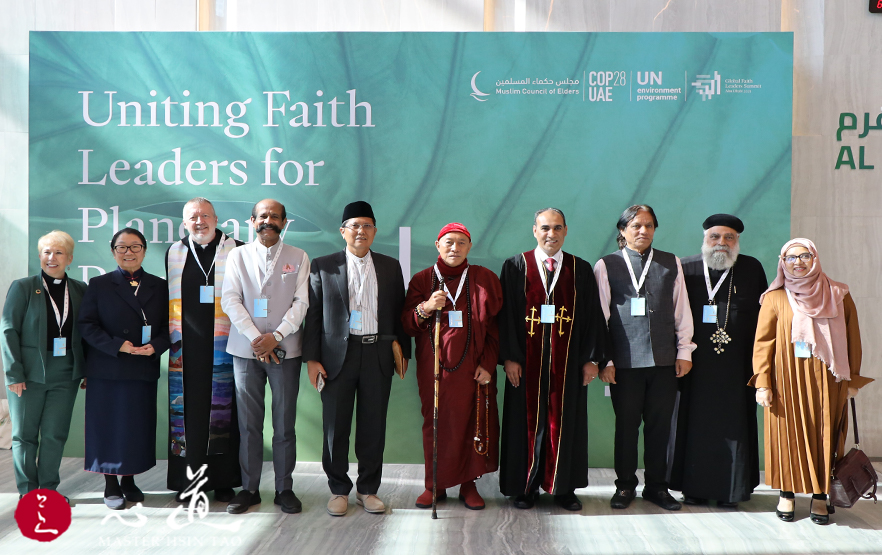
The founding purpose of the Museum of World Religions was to connect diverse faiths and promote interfaith dialogue and cooperation, guided by the principles of respect, tolerance, and love, in order to foster peace and protect the environment. Currently, the Ling Jiou Mountain Buddhist Society is preparing to establish the University for Life and Peace, grounded in the values of loving the Earth and promoting peace, with the aim of researching methods to heal the planet. Through education and interdisciplinary integration, it seeks to restore compassion and love within the human heart, initiate spiritual intelligence, and transform the harms caused by greed, aversion, and ignorance into opportunities for ecological renewal, ultimately establishing a harmonious model of coexistence between humanity and the environment.
 V. Conclusion
The Vimalakirti Sutra states: “Pure mind, pure land.” This teaching illustrates how the purification of the inner mind extends outward to transform the material world, offering a key method for addressing contemporary ecological crises. The Earth is our shared home. Recognizing this, we must generate collective aspiration and collaborative action. Guided by the idea of “Hand in Hand for Coexistence,” we can work together to transform our ecological reality—ensuring planetary stability, world peace, social harmony, ecological sustainability, and the enduring future of humanity.